Pacific Insurance and Climate Adaptation Programme (PICAP)

Grants

Guarantees
Pacific Small Island Developing States are among the most climate-vulnerable countries globally. Increasingly severe cyclones, floods, droughts, and sea-level rise are displacing communities, disrupting livelihoods, and placing sustained pressure on already constrained public finances, contributing to rising debt vulnerabilities. These risks are compounded by the lack of pre-arranged, predictable, and affordable financial and insurance solutions that enable households and businesses to respond and recover quickly and with dignity following climate shocks.
Launched in December 2020, the Pacific Insurance and Climate Adaptation Programme (PICAP) is strengthening the financial preparedness and resilience of Pacific communities by developing and deploying market-based climate and disaster risk finance and insurance (CDRFI) solutions, including parametric insurance. These solutions provide rapid, data-triggered financial support to households, farmers, fishers, market vendors, and micro, small and medium enterprises (MSMEs) to support faster recovery and reduce reliance on post-disaster aid.
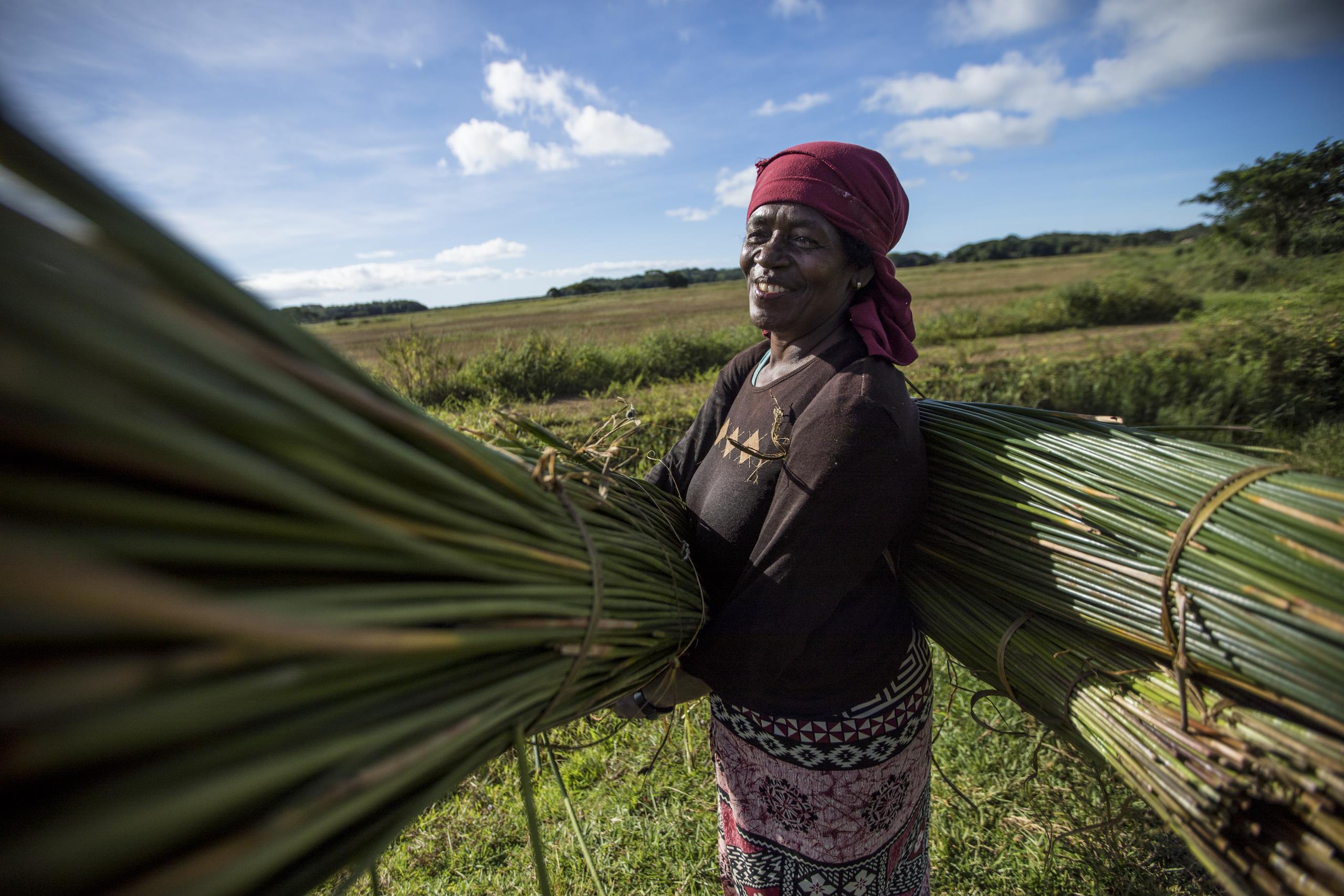
 Photo: John Rae, UNCDF.
 Photo: John Rae, UNCDF.
PICAP introduced innovative parametric insurance products in Fiji, Tonga, and Vanuatu during its inception phase (2021–2022). The initiative has since scaled across eight Pacific markets: Fiji, Papua New Guinea, Tonga, Vanuatu, Samoa, Solomon Islands, Kiribati, and Tuvalu. In Fiji and Papua New Guinea, parametric insurance has transitioned from pilots to full market deployment, with digital payouts triggered by hazard events, demonstrating both the technical feasibility and market viability of parametric insurance as a climate risk financing instrument.
PICAP prioritises innovation to address systemic market barriers. UNCDF is working with the Asian Development Bank to design a parametric insurance solution tailored for MSMEs in Fiji to strengthen private sector resilience to climate shocks. UNCDF has also partnered with the UN Office for Disaster Risk Reduction to pilot an anticipatory action parametric insurance product, which releases partial payouts before cyclones make landfall. This approach enables advance preparedness, reduces losses, and strengthens community resilience.
As an extension to this initiative, UNCDF is developing an Insurance Guarantee Financing Facility (IGFF) in partnership with Aon aligned with UNCDF’s Strategic Framework 2026–2029. The facility is designed to accelerate the scale-up of parametric insurance markets by addressing both demand- and supply-side constraints. It will provide premium pre-financing and concessional loans to households and MSMEs to improve affordability and uptake; and risk-absorbing guarantees to insurers and distribution partners to reduce market entry risks and strengthen supply.
This blended finance mechanism aims to crowd in private capital, improve affordability, and build sustainable climate insurance markets in vulnerable economies.
The latest
Our partners
The Pacific Insurance and Climate Adaptation Programme (PICAP) is led by the UN Capital Development Fund, with the UN Development Programme (UNDP), and the UN University Institute for Environment and Human Security as partner agencies.


The programme receives financial support from the Governments of New Zealand, Australia, the Government of Luxembourg (through the Fiji Government’s Drua Incubator) and the United Kingdom. In Fiji, the Scaling Climate Disaster Risk Financing Framework and Parametric Insurance initiative received additional funding from India, through the India–UN Development Partnership Fund, managed by the UN Office for South-South Cooperation.



| Title | Type | Date |
|---|
Contact us
For inquiries about UNCDF’s Pacific Insurance and Climate Adaptation Programme, please contact our team on asiapacific.region@uncdf.org.
