

EU-backing delivering climate finance results with LoCAL
Climate Finance and the importance of channelling funds to communities for locally led adaptation and mitigation actions, is a hot topic at a number of climate events right now. The Local Climate Adaptive Living Facility, or LoCAL, is one of the leading models for channelling funds to people in developing and Least developed Countries for climate adaptation and European funding has been instrumental to its success.
Whether it’s the recent Local Climate Solutions for Africa, the ongoing London Climate Action Week or the upcoming Climate Ambition Summit – climate finance and its potential for local level action in developing countries and LDCs features on the agenda. The LoCAL facility has mobilised close to US$ 100 m for local level action with the bulk of these funds coming from the European Union and Member States.
“Climate finance and local level action are getting a lot of attention right now, all the big climate events are really zero-ing in on this issue,” said LoCAL Facility Manager Sophie De Coninck.
“What’s getting less attention is the fact that the EU and their partner LDCs are driving a lot of action already in this area, with notable results from countries across Africa to Asia and beyond.”
 LoCAL beneficiary Afram Plains, Ghana.
LoCAL, originally designed by the UN Capital Development Fund and launched in 2011, aims to promote climate change-resilient communities and local economies.
LoCAL works by establishing a standard and internationally recognized country-based mechanism to channel climate finance to local government authorities and their communities in LDCs and other vulnerable countries such as Small Island Developing States and African countries.
As a result, LoCAL contributes to the local-level achievement and implementation of the Paris Agreement, particularly nationally determined contributions, national adaptation plans and climate-related Sustainable Development Goals.
As of May 2020, LoCAL had engaged with 293 local governments, representing over 11 million people in 14 countries: Bangladesh, Benin, Bhutan, Cambodia, The Gambia, Ghana, Lao PDR, Lesotho, Mali, Mozambique, Nepal, Niger, Tanzania and Tuvalu.

LoCAL is strongly supported with funding from the European Union and Member States, in particular Sweden. To date over US $94 million of funds, including domestic resources, have been mobilised for climate action.
In 2019, some 92% of LoCAL funds came from just two European donors – the EU and the Swedish International Development Cooperation Agency, Sida.
Bhutan was one of the first countries to adopt LoCAL and the country is poised to roll-out LoCAL at the national level. With LoCAL support, the Bhutan Trust Fund for Environment Conservation (BTFEC) in April 2020 was accredited as the Green Climate Fund national implementing entity – a major step forward for mobilising and managing climate finance in the country. And, with EU budget support, the Government of Bhutan has committed US$ 7 million to support national scale-up of LoCAL. As of end 2019, almost half of all the country’s 205 districts had been allocated grants for locally determined climate adaptation actions.
In Bangladesh, LoCAL is part of the multi-donor collaborative initiative: Local Government Initiative on Climate Change (LoGIC), which is funded by Sida and the European Union, with some input from the United Nations Development Programme and UNCDF. As part of that initiative, communities are getting involved in the collection, update and analysis of climate change processes and have begun developing their own risk reduction action plans. The action plan development process involved local government officials, community representatives and civil society organizations. In all, 5,377 local authority officers and community representatives in Bangladesh participated in awareness and capacity-building activities in 2019, actions that could not have happened without the support of the EU and Sida.
In Ghana, LoCAL is being implemented as part of the GrEEn Project, which is funded through the EU Emergency Trust Fund for Africa. There, grants are being used to stimulate green and resilient local economies, creating jobs through cash-for work programmes and procurement to local small and medium-sized enterprises. Combined with market system approaches for financial inclusion and skills development, the initiative aims to support job creation in regions of migrant departure, transit and return in Ghana, enabling the transition of local economies to green and climate-resilient development.
In The Gambia, LoCAL is part of the Jobs, Skills and Finance for Women and Youth, which is funded by the EU. The JSF programme aims to contribute to improve the economic, social and security situation of the country during its democratic transition. Leveraging LoCAL and UNCDF instruments for financial inclusion and SME finance, JSF focus on green employment for youth and women, with a specific emphasis on promoting gender equality and addressing climate change.
In Mozambique, where Sida and the EU have together allocated over US$ 19 million for LoCAL actions, 13 districts are now integrating climate change adaptation into their development plans. Local capacities and awareness around the need for climate change consideration in planning have increased with plans for wider take up.
“From the experience we’ve seen,” said Hon. Domingos Lambo, Permanent Secretary, Ministry of Economy in the Government of Mozambique, speaking at the LoCAL Board Meeting earlier this year. “We’re convinced that LoCAL is the right application to expand our climate adaptation actions to other districts.”
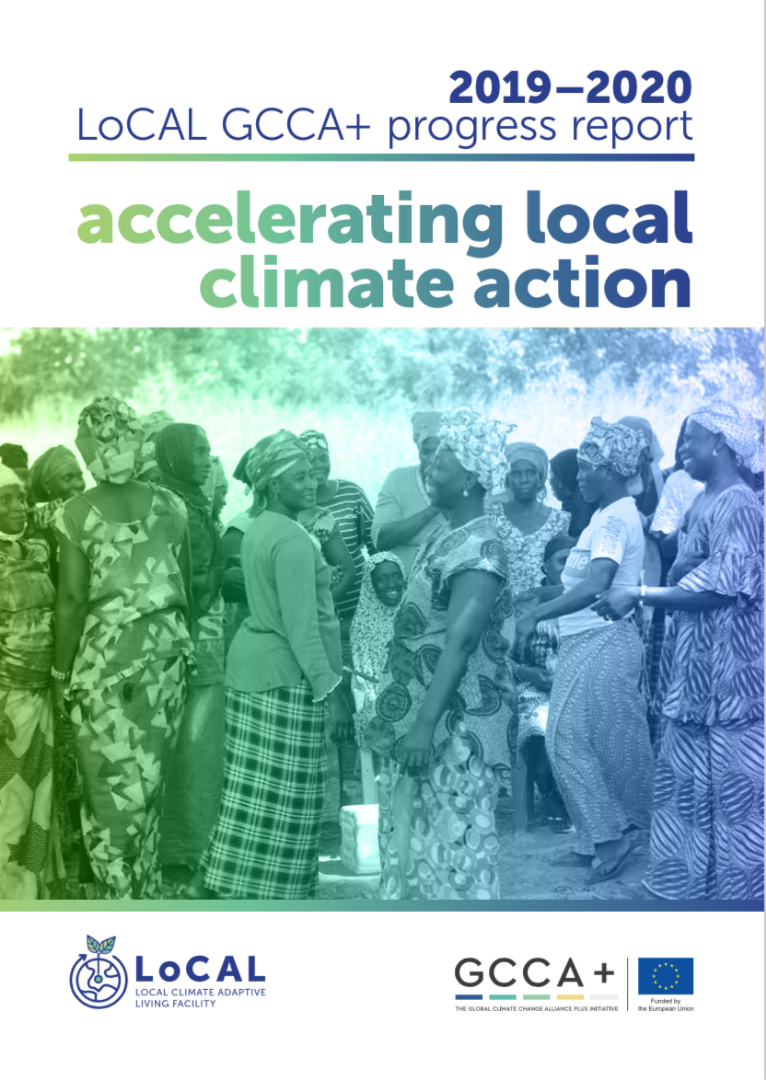
FOR MORE INFORMATION ABOUT EU SUPPORT FOR THE LoCAL FACILITY, READ THIS LATEST REPORT
LoCAL EU Progress Report 2019
Click cover to download
LoCAL, originally designed by the UN Capital Development Fund and launched in 2011, aims to promote climate change-resilient communities and local economies. LoCAL works by establishing a standard and internationally recognized country-based mechanism to channel climate finance to local government authorities and their communities in LDCs and other vulnerable countries such as Small Island Developing States and African countries. As a result, LoCAL contributes to the local-level achievement and implementation of the Paris Agreement, particularly nationally determined contributions, national adaptation plans and climate-related Sustainable Development Goals.
Join the LoCAL Network
Join the LoCAL Network
Visit our site sections
Our Partners:
Get the LoCAL newsletter
Enter your email below to subscribe
Stay Connected
Get the latest updates to your inbox